What Are the Top 10 Types of Packaging Solutions?
Packaging shapes how products are protected, transported, displayed, and remembered. A strong package must survive warehouse pressure, delivery movement, humidity, and repeated handling. It must also communicate clearly on a crowded shelf. This guide examines the top 10 types of packaging solutions, from corrugated boxes and folding cartons to flexible pouches, glass containers, metal cans, tubes, blister packs, rigid plastics, reusable containers, and sustainable fiber formats.
The selection considers product safety, material performance, production cost, branding, storage efficiency, recyclability, and customer convenience. Raymond Loewy, the influential industrial designer, famously observed, “The package is the product.” His statement remains practical today. A clear window can build trust. A secure closure can prevent leakage. A thinner material can reduce shipping weight, but it may weaken protection. Small details matter.
No single format is best for every product. That is the difficult part. A premium glass bottle may communicate quality, yet add transport weight and breakage risk. A flexible pouch can save space, but some recycling systems still struggle with it. These limitations deserve honest attention. Packaging decisions should match the product, supply chain, budget, and end-of-life reality. This overview offers a professional comparison rather than a rigid answer. It also recognizes that “sustainable” does not always mean sustainable everywhere. Readers can use these insights to question supplier claims, compare specifications, and select packaging solutions with greater confidence.
What Defines a Packaging Solution and How Are Its Types Classified?
A packaging solution is more than a container. It combines materials, shape, closure, labeling, protection, and delivery requirements. A good solution protects the product while supporting storage, transport, handling, and customer use. Fit matters.
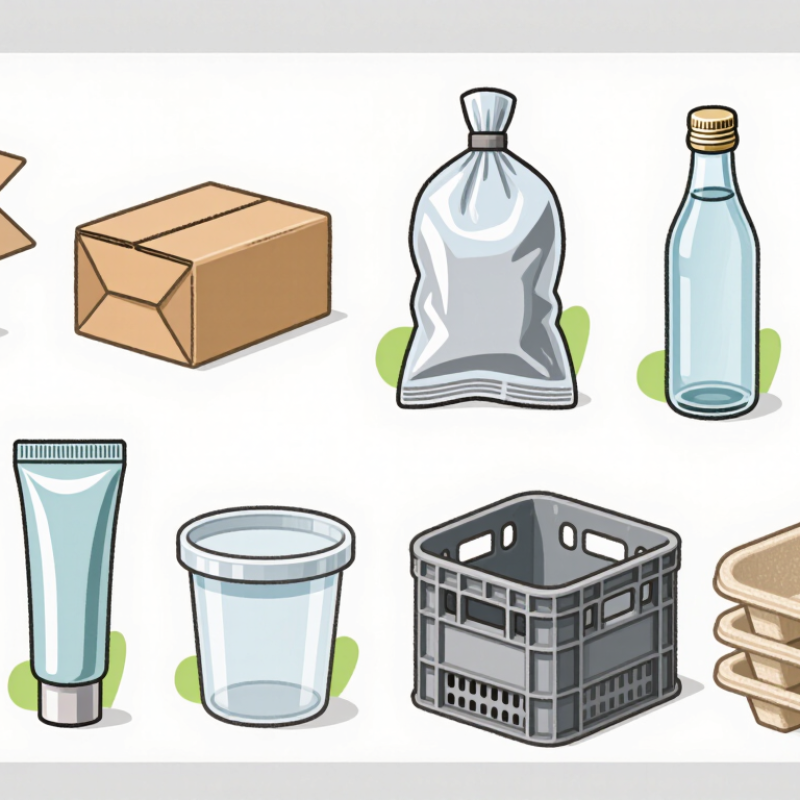
The ten common types include folding cartons, corrugated boxes, flexible pouches, rigid plastic containers, glass bottles, metal cans, trays, tubes, bags, and protective mailers. These types are classified by material, structure, function, and end-of-life options. Folding cartons suit lightweight retail goods. Corrugated boxes handle stacking and shipping pressure. Flexible pouches save space, while glass offers strong barrier protection and a premium feel. Metal cans resist impact and protect contents from light.
Classification also depends on the product’s risks. Moisture-sensitive goods may need sealed films or coated cartons. Fragile items require cushioning, dividers, or molded inserts. Large shipments may prioritize pallet stability over appearance. In practical packaging assessments, teams test compression, vibration, drops, temperature changes, and opening ease. A container that survives the warehouse may still frustrate a customer. That gap matters.
Material selection needs careful judgment. Lightweight packaging can reduce transport emissions, but thinner structures may fail more often. Reusable formats sound attractive, yet cleaning, collection, and return systems must exist. Nothing is perfect. Even a recyclable package can perform poorly when its parts are difficult to separate. Reliable classification therefore considers protection, cost, usability, supply conditions, and realistic disposal behavior together.
What Are the Top 10 Types of Packaging Solutions?
Packaging solutions are classified by their structure, material, protection level, opening method, and intended use. The chart compares ten widely used packaging formats by their primary protection capabilities: barrier protection, impact protection, and convenience.
Which Packaging Solutions Protect and Contain Individual Products?
Individual products need packaging that contains, cushions, and communicates clearly. Common solutions include folding cartons, rigid containers, glass bottles, metal cans, flexible pouches, blister packs, molded pulp trays, foam inserts, paper wraps, and protective mailers. Each option solves a different risk. A carton prevents crushing. A molded tray limits movement. A sealed pouch controls moisture and air exposure.
Testing should match the product’s real journey. ISTA distribution protocols examine vibration, drops, compression, and handling stress. These tests reveal weak corners and poor closures before shipment. Smithers projects the global packaging market will exceed US$1.2 trillion by 2028, showing how widely these systems are used. Yet larger demand does not guarantee better protection.
Packaging design also needs material discipline. The OECD’s Global Plastics Outlook reports that packaging represents about 40% of global plastic use. That figure deserves attention. Lightweighting can reduce material, but excessive reduction may cause dents, leaks, or product loss. The right package is not always the thinnest one. For sensitive goods, a sealed primary container, fitted insert, and durable outer box often provide practical protection. Field trials still matter. Laboratory results can miss rough warehouse handling, awkward stacking, or humid storage. Sometimes, the first design fails. That failure is useful when teams measure it honestly and improve the next version.
Which Packaging Solutions Support Product Grouping and Presentation?
Packaging solutions do more than protect individual products. They can group items, guide customer attention, and create a clear shelf story.
Folding cartons work well for sets of small goods. Their printed panels explain contents while keeping units aligned.
Rigid boxes offer stronger presentation for premium collections. They also resist crushing during storage and transport.
Trays and sleeves provide a practical middle ground. A tray holds several products in fixed positions. A sleeve wraps the group without hiding every detail. This combination suits food portions, personal care kits, and small household sets.
Display boxes add another advantage. They can move from shipping cartons directly onto retail shelves. Open fronts improve visibility, but they may reduce dust protection. That trade-off deserves testing.
Multipacks, bundle boxes, and partitioned cartons support larger product groups. Dividers prevent movement and reduce surface damage. Clear windows help shoppers inspect size, color, or quantity before purchase.
However, too many visual elements can make a package feel confusing. I have seen attractive layouts lose effectiveness because product information became crowded.
Simpler spacing often performs better. Small changes matter.
Packaging teams should test filled packs, not empty samples. Weight, moisture, stacking pressure, and opening behavior can change the final experience. Recyclable materials may also require structural adjustments, especially when replacing heavier laminates. Good presentation is useful only when the package remains stable, readable, and practical.
Which Packaging Solutions Enable Storage, Handling, and Transportation?
Packaging solutions must do more than look attractive. They must keep products stable during storage, handling, and transportation. The ten leading types include corrugated boxes, paperboard cartons, flexible films, rigid plastic containers, pallets, wooden crates, reusable plastic totes, drums, intermediate bulk containers, and protective foam inserts. Each format solves a different physical problem. A corrugated box suits warehouse stacking, while a pallet improves forklift access and load stability. Flexible film reduces empty space, but it may need corner protection and careful tension control.
Selection should follow the product’s weight, moisture sensitivity, travel distance, and storage duration. The OECD’s Global Plastics Outlook reports that packaging represented about 40% of global plastic use in 2019. That figure makes material reduction and reuse practical priorities, not decorative claims. Reusable totes can lower repeated packaging demand, especially in closed distribution loops. However, they require return transport, cleaning, tracking, and enough circulation volume. Otherwise, their environmental advantage may weaken. A useful test is simple: place a loaded unit on a pallet, move it across a rough floor, and inspect every contact point.
Industry data also shows why transport design matters. The World Bank’s What a Waste 2.0 estimates that global municipal solid waste could reach 3.40 billion tonnes annually by 2050 without stronger intervention. Packaging engineers should therefore measure damage rates, cube utilization, stacking strength, and recovery options. A smaller carton is not automatically better. It may increase crushing, returns, and product loss. Good packaging is evidence-led, adjustable, and honest about trade-offs.
What Are the Top 10 Types of Packaging Solutions? Which Packaging Solutions Enable Storage, Handling, and Transportation?
| Packaging Solution | Common Materials | Storage Function | Handling Function | Transportation Function | Protection Level | Reusability | Typical Applications |
|---|---|---|---|---|---|---|---|
| Corrugated Boxes | Paper-based corrugated fiberboard, kraft paper liners, starch-based adhesives | Stackable and space-efficient for shelves, racks, and pallet storage | Easy to label, close, lift, and consolidate into unit loads | Cushions products against moderate vibration and compression when correctly specified | Moderate to high | Usually single-use; commonly recyclable where collection systems exist | E-commerce orders, consumer goods, spare parts, and general shipping |
| Rigid Plastic Containers | High-density polyethylene, polypropylene, polyethylene terephthalate, or other molded plastics | Maintain shape during stacking and protect contents from moisture and dust | Suitable for lids, handles, nesting, and repeated loading operations | Resist impact, moisture, and repeated movement during distribution | Moderate to high | Often reusable; recyclability depends on resin type, design, and local infrastructure | Liquids, chemicals, food ingredients, components, and industrial supplies |
| Flexible Pouches and Bags | Plastic films, paper laminates, aluminum foil laminates, or mono-material films | Use little storage space and can be packed flat before filling | Lightweight and easy to seal, open, dispense, or group into secondary packs | Low package weight reduces shipping mass; requires protection from puncture and crushing | Low to moderate | Generally single-use; recycling depends on structure and available collection systems | Dry foods, pet food, powders, personal-care products, and refill formats |
| Glass Containers | Soda-lime glass, borosilicate glass, closures, and protective secondary packaging | Stable for long-term storage and provides an effective barrier to gases and moisture | Requires careful gripping, dividers, trays, or case packs to reduce breakage | Heavy and breakable; needs cushioning and secure unitization for distribution | High barrier; fragile | Reusable in some systems and widely recyclable where facilities accept glass | Beverages, food, pharmaceuticals, cosmetics, and laboratory products |
| Metal Cans and Drums | Steel, tinplate steel, aluminum, coatings, and metal closures | Provide strong stacking performance and protection from light, moisture, and gases | Compatible with pallet handling, clamps, drum lifters, and standardized closures | Resist crushing and puncture; drums require secure strapping or suitable pallets | High | Industrial drums may be reusable; steel and aluminum are recyclable materials | Food and beverage products, paints, lubricants, chemicals, and aerosols |
| Wooden Crates and Cases | Sawn timber, plywood, oriented strand board, nails, screws, and metal fasteners | Provide rigid stacking and protect large or heavy items in storage areas | Can be designed for forklift access, lifting points, and internal bracing | Suitable for heavy, oversized, or irregular products requiring impact protection | High | Often reusable when structurally sound; export use may require compliant treated wood | Machinery, industrial equipment, construction components, and fragile assemblies |
| Pallets and Unit-Load Platforms | Wood, plastic, metal, or composite materials | Keep cartons and containers elevated, organized, and accessible for warehouse racks | Enable forklift and pallet-jack access and simplify load consolidation | Improve load stability and handling efficiency when combined with stretch wrap or strapping | High for load support | Designed for repeated use in many supply chains; repairability varies by material | Warehousing, distribution centers, manufacturing, and bulk shipments |
| Stretch Wrap and Shrink Film | Linear low-density polyethylene, polyethylene film, and heat-shrink polymers | Groups products and helps limit dust, moisture exposure, and load displacement | Secures cartons to pallets and supports stable movement with handling equipment | Reduces shifting during vibration and acceleration when applied at suitable tension | Moderate for load securing | Typically single-use; some films may be recyclable if collected and sorted | Palletized goods, warehouse storage, mixed loads, and outbound shipments |
| Cushioning and Protective Inserts | Paper fiber, molded pulp, corrugated fiberboard, foam, air cushions, or molded plastics | Hold products in position and separate items within an outer package | Reduce contact between products and make packing configurations more consistent | Absorb or distribute shock and vibration; performance depends on material and design | High for impact control | Varies by material; paper-based inserts may be recyclable, while foams require specific routes | Electronics, glassware, medical devices, instruments, and delicate components |
| Insulated and Temperature-Controlled Packaging | Expanded or extruded polystyrene, polyurethane foam, vacuum panels, paper insulation, gel packs, or dry ice systems | Helps maintain a defined temperature range during temporary storage | Supports organized packing with thermal barriers, coolant placement, and clear handling instructions | Controls temperature exposure during transit when validated for route duration and conditions | High for thermal protection | Some systems are reusable; coolant handling and material recovery requirements vary | Pharmaceuticals, vaccines, biologics, fresh foods, and temperature-sensitive samples |
How Should Businesses Compare and Select Packaging Solutions?
What Are the Top 10 Types of Packaging Solutions?
Businesses can choose from corrugated boxes, folding cartons, rigid boxes, flexible pouches, bottles, jars, tubes, cans, trays, and protective mailers. Each format serves a different purpose. Corrugated boxes suit shipping, while pouches reduce storage space. Rigid boxes can improve presentation but often require more material. Tubes work well for controlled dispensing. Trays can organize products during transport.
How Should Businesses Compare and Select Packaging Solutions?
Start with the product’s weight, shape, fragility, moisture exposure, and expected shelf life. Then assess protection, cost, filling speed, storage space, and disposal requirements. A package may look efficient in a sample room but fail during a humid delivery route. Small drop tests and temperature checks can reveal weaknesses early. Ask suppliers for material specifications, testing records, and production tolerances. Check whether dimensions fit existing equipment. This prevents expensive adjustments later. No scorecard is perfect. Teams should review real customer complaints and damaged shipments, not only purchase prices. A slightly heavier package may reduce returns and waste. That trade-off deserves careful measurement.
Tips: Compare at least three suitable formats. Test filled packages, not empty samples. Record damage, packing time, and material use. Recheck the decision after seasonal demand changes. An attractive design is not always a practical one.
Related Posts
-
What Is a Packaging Solution for Global Buyers?
-

2026 Top Packaging Services Trends in the Industry
-
Top 5 Packing Solutions Tips for Global Buyers?
-

What is the Best Packing Solutions for Your Business Needs?
-

Top Packaging Products for Global Buyers in 2026?
-
10 Best Packaging Solutions for Global Buyers?